
If you live in the North West of England, it’s reasonable to wonder whether solar panels are really worth installing. After all, we’re not exactly known for endless sunshine.
The good news is that solar panels don’t need hot weather or constant sunshine to work. They generate electricity from daylight, which means they continue producing power even on cloudy days.
Yes. Solar panels generate electricity from daylight, not heat. Output is lower on an overcast day than on a clear summer day, but the panels continue producing electricity whenever there is usable daylight.
That means the North West’s weather doesn’t prevent solar from working. What matters more is how well the system is designed around your roof, shading and electricity use.
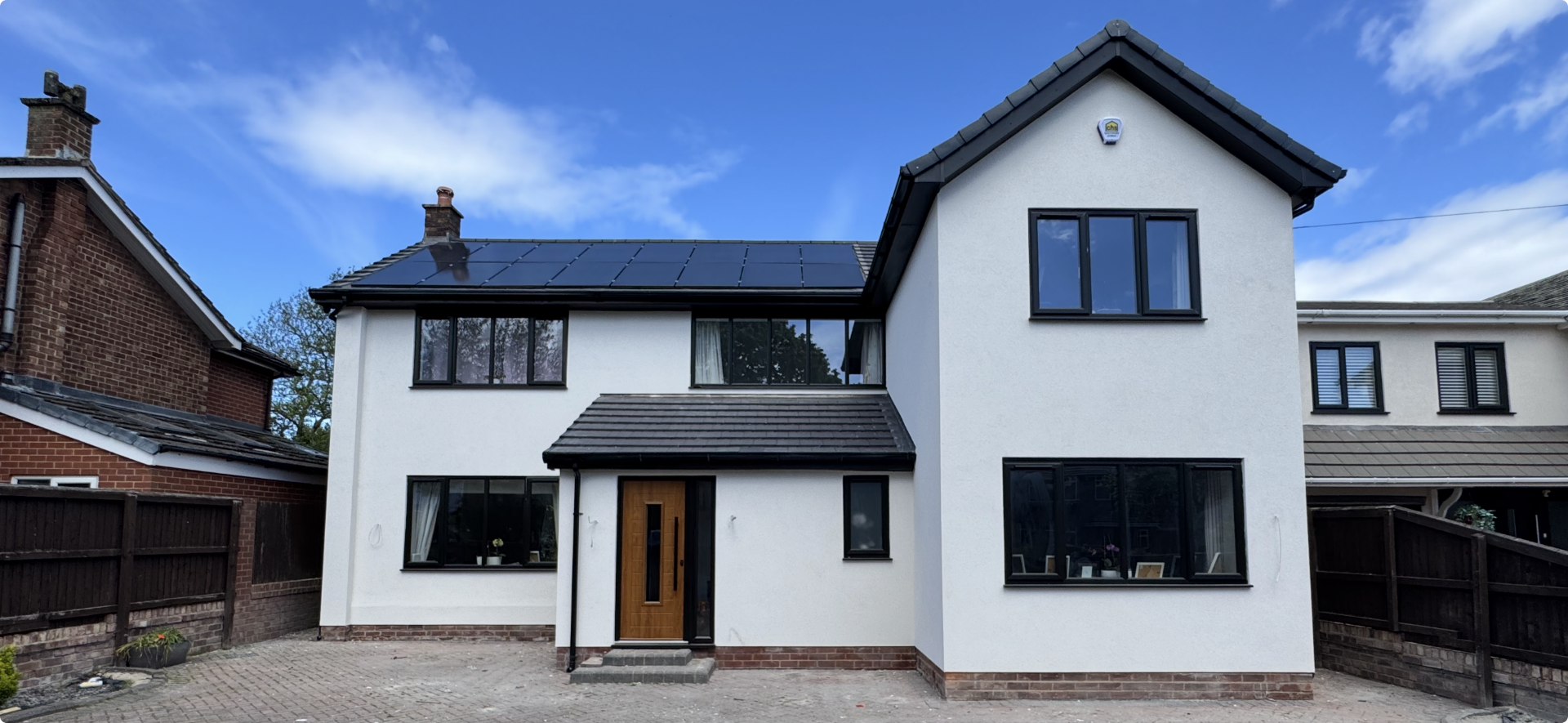
Solar payback varies from home to home. The cost of the system, roof orientation, shading, electricity use and how much of the solar generation you use yourself can all affect the return.
Current Energy Saving Trust modelling suggests a typical solar installation in the North can achieve a payback period of around 10-11 years, obviously depending on system design, pricing, household usage and export payments.
That figure shouldn’t be treated as a guarantee for every property, but it shows that solar can still make strong financial sense in the North West when the system is designed properly.
If your solar panels generate more electricity than your home is using, that surplus energy doesn’t have to go to waste. It can either be stored in a home battery for use later, or exported back to the electricity grid.
Under the Smart Export Guarantee, eligible households can receive payments for electricity exported to the grid. Export rates and conditions vary between energy suppliers, so it’s worth comparing tariffs rather than assuming every supplier pays the same rate.
Potentially, but it depends on how and when your home uses electricity. A battery stores surplus solar energy so you can use it later, for example in the evening when your panels are producing less or no electricity.
That can increase the amount of your own solar generation you use at home and reduce how much electricity you need to buy from the grid.Battery storage can also give you more flexibility if you have an EV, a heat pump or a time-of-use electricity tariff.
It isn’t automatically the right financial choice for every household, though. The right battery size depends on your usage pattern, system size, export tariff and what you want the system to achieve.
There is currently an additional incentive for homeowners considering solar. Qualifying residential solar installations benefit from 0% VAT until 31 March 2027. Under current rules, the rate is scheduled to return to 5% from 1 April 2027.
That doesn’t mean solar should be rushed into without proper design, but if you’re already considering an installation, the current VAT treatment is worth factoring into the timing of the project.
No. Not every home is equally suited to solar. Roof orientation, available space, shading, roof condition and how much electricity you use all affect how well a system is likely to perform.
South-facing roofs often give the strongest output, but east- and west-facing roofs can also work very well especially if you use more electricity in the morning or late afternoon.
If a property isn’t a good fit for solar, we’ll tell you!
For many homes, yes. The North West may not get the same levels of sunshine as the south coast, but modern solar panels still generate electricity throughout the year, including during cloudy conditions.
For the right property, solar can reduce the amount of electricity you buy from the grid, provide some protection against future energy price increases and allow you to earn money from surplus electricity exported through the Smart Export Guarantee
The key is getting the system design right. A system should be sized around your roof, your electricity use and what you actually want to achieve - not simply around fitting as many panels as possible.
If you’re considering solar in Formby, Southport, Liverpool or across the wider North West, Stonehaven Energy can assess your property, electricity usage and future energy plans and help you understand what system would make sense for your home.